
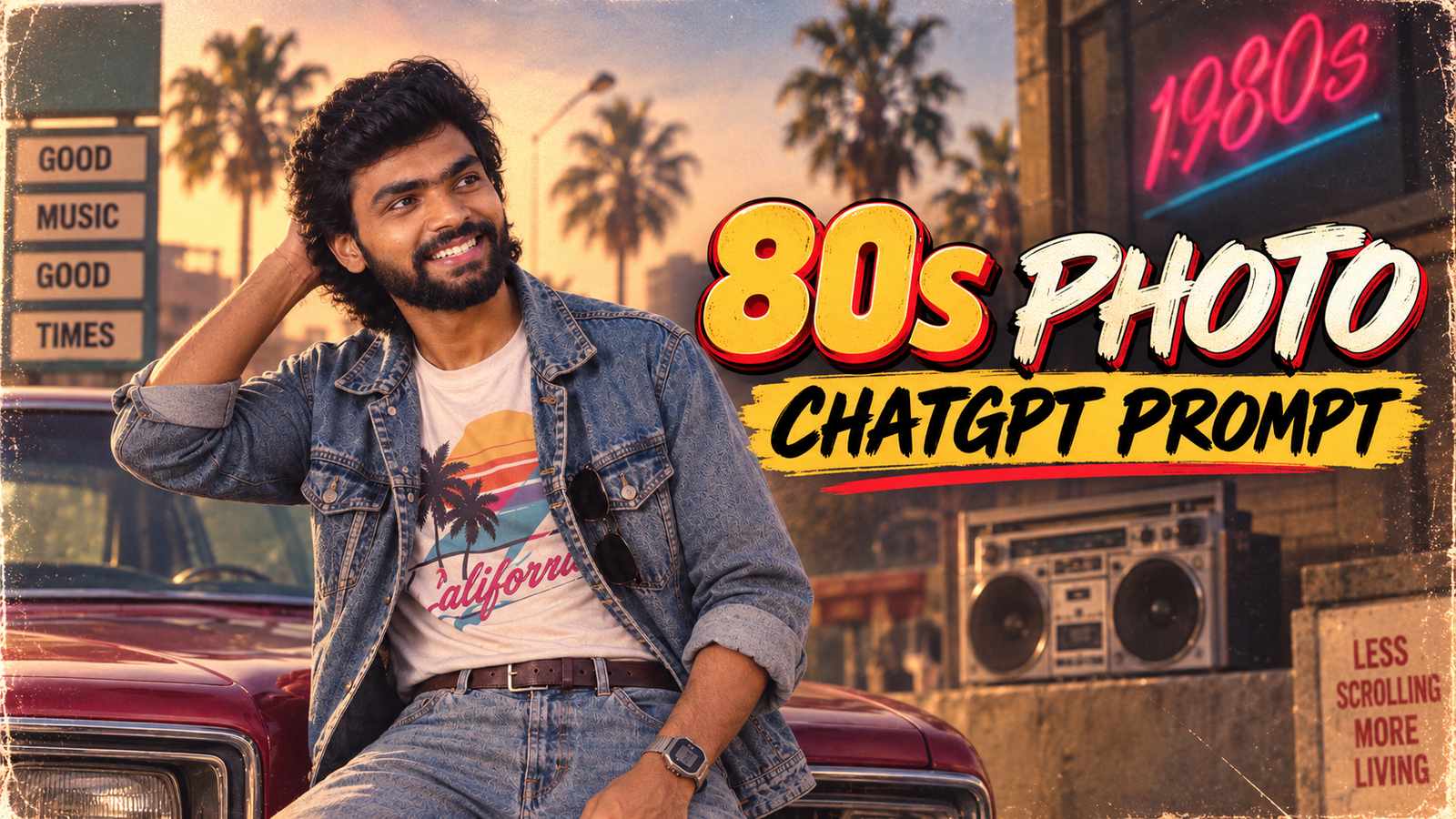
Prompt #1
What would I have looked like in the 80s? Transform this photo into an authentic 1980s look while keeping my facial features and identity unchanged. Add realistic 80s fashion, hairstyle, makeup and vintage photography aesthetics”
PROMPT
Create a vintage 1980s or 1990s style portrait of a stylish boy standing outdoors near a classic Yamaha RX100 motorcycle. The man has long, voluminous curly hair and a mustache, wearing dark sunglasses, a denim-on-denim outfit featuring an acid-wash denim jacket over a white t-shirt with a vintage logo, and acid-wash jeans. The lighting should have a warm, nostalgic, film-grain look, capturing a retro lifestyle aesthetic.
Prompt #1
Use my uploaded photo as the primary identity reference. Recreate me as the exact same person shown in my uploaded photo. Preserve my facial identity with maximum accuracy — same face shape, eyes, eyebrows, nose, lips, beard, jawline, skin tone, hairline and natural facial proportions. Do NOT beautify, redesign, or replace my face. I must look unmistakably like the person in the uploaded photo. Create a photorealistic cinematic portrait inspired by the 1980s, as if I were living in that era. Pose & Composition: A stylish young Indian man casually leaning against the front/side of a vintage classic car from the 1980s. His body is relaxed and confident, one shoulder slightly resting against the car, one hand naturally placed near his pocket while the other hangs casually. Natural masculine posture, not a model-like exaggerated pose. Camera positioned at approximately chest/eye level, slightly close-up, with the subject occupying most of the frame. Face & Expression: Keep my exact facial identity from the uploaded photo. Give me a natural, confident subtle smile, relaxed eyes and authentic expression. Realistic skin texture with visible pores and tiny natural imperfections. Avoid overly smooth skin, plastic skin, AI-generated facial features or excessive sharpening. Hair: Keep my original hairstyle and facial hair characteristics from the reference photo, but style them naturally with a slightly voluminous 1980s-inspired texture. Hair should look physically real with individual strands, natural volume and believable lighting. Outfit: Give me an authentic 1980s casual street-fashion outfit: vintage light-blue denim jacket with realistic faded denim texture slightly oversized relaxed fit plain/off-white retro graphic T-shirt underneath high-waisted vintage blue denim jeans classic brown leather belt optional retro sunglasses tucked naturally into the jacket pocket or worn if it suits the composition simple vintage wristwatch The clothing must have realistic fabric folds, stitching, seams, wrinkles and natural shadows. Environment: Set the scene in an authentic 1980s Indian urban street, with a nostalgic old-school atmosphere. A vintage car is parked behind/next to me. Background includes subtle old buildings, telephone/electric poles, slightly dusty roads, old shop fronts, vintage signage and a few distant palm trees. Add a small retro neon-style “1980s” sign in the background, but keep it subtle and naturally integrated into the environment. Lighting: Warm golden-hour sunlight coming from one side, creating soft highlights on my face and hair. Cinematic warm tones, gentle shadows and realistic skin illumination. Slight atmospheric haze in the background. The lighting should look like it was captured with a real professional camera rather than digitally generated. Photography: Ultra-realistic professional photography, full-frame camera look, 50mm vintage portrait lens, shallow depth of field, realistic optical bokeh, natural perspective, detailed skin texture, realistic hair strands, realistic denim texture, subtle film grain, soft highlight roll-off, slight analog film characteristics. Color & Style: Authentic 1980s Kodak-style cinematic film photography, warm slightly faded colors, subtle grain, muted contrast, nostalgic analog color grading, natural skin tones. Avoid modern HDR, excessive clarity, neon cyberpunk colors or overly dramatic grading. Important: The final image must look like a real photograph taken in the 1980s, not an AI-generated image. Maintain realistic anatomy, realistic hands and fingers, believable clothing physics, natural shadows and accurate facial proportions. Identity preservation is the highest priority. Do not change my face. Do not make me look like another person. Do not alter my ethnicity, age or fundamental facial structure. Aspect ratio: 3:4 vertical portrait. High resolution, photorealistic, cinematic, natural, premium editorial photography. 🚫 Negative Prompt AI-looking face, different person, face replacement, altered facial structure, plastic skin, waxy skin, excessive beauty filter, unrealistic beard, distorted eyes, asymmetrical eyes, extra fingers, deformed hands, extra limbs, bad anatomy, cartoon, CGI, 3D render, overprocessed HDR, excessive sharpening, modern clothing, futuristic background, oversaturated colors, fake bokeh, unrealistic lighting, duplicate objects, unnatural pose, low detail, blurry face, artificial skin texture. Tip: Agar tool me reference/image strength ka option hai, face/identity reference ko high rakho, lekin style strength moderate rakho. Isse 80s look aayega without your face getting changed.
Prompt #2
PROMPT Key Elements of the Image: 1. Central Subject: A stylish man stands leaning against the wooden framework of the tea stall. He has a full beard, voluminous wavy dark hair, and wears dark aviator sunglasses. He holds a small, traditional glass of hot tea (chai) in his right hand. 2. The Outfit: A colorful, multi-patterned paisley print button-down shirt with the sleeves casually rolled up to the mid-forearm.
Prompt #3
Using the uploaded photo as the ONLY reference, show me what I would have looked like in the 1980s. Preserve my face and identity as accurately as possible — do NOT change my facial structure, eyes, nose, lips, jawline, moustache, skin tone, or overall recognizable features. Do not make me look like another person.
Prompt #4
Create a highly realistic 1980s South Indian color photograph in a 4:6 vertical aspect ratio. Use the uploaded reference image as the ONLY facial identity reference. Keep the person’s face 100% identical to the reference image — same facial structure, proportions, eyes, eyebrows, nose, lips, jawline, skin tone, natural facial details and identity. Do not beautify, reshape, smooth, replace, merge, age, or stylize the face. The person must genuinely look as though they belonged to the 1980s. The entire image must feel like an actual photograph taken in a South Indian college campus during the 1980s, not a modern photograph with a retro filter. SCENE: Place the person naturally inside an authentic 1980s South Indian college campus. Show old college buildings with long verandas, concrete pillars, wooden classroom doors, large windows, old notice boards, handwritten announcements, blackboards, stacks of textbooks, wooden benches, mature trees and a simple campus canteen. Include many period-authentic bicycles parked near the building, a few classic scooters and an occasional old car in the distance. Add students naturally walking around the campus wearing genuine 1980s clothing and hairstyles. Include subtle 1980s visual details such as old college magazines, handwritten posters, wall notices, vintage calendars and faded hand-painted advertisements. Keep everything realistic and naturally integrated. WARDROBE: Give the person a completely different authentic 1980s college outfit: a slightly loose **light sky-blue full-sleeve shirt**, sleeves casually rolled up to the forearms, tucked into high-waisted dark-brown trousers, simple leather belt, classic analog wristwatch and period-correct brown leather sandals. HAIRSTYLE: Authentic 1980s South Indian men’s haircut — naturally thick dark hair, neatly combed with a fuller top and slightly fuller sides, clean traditional grooming. Keep the person’s natural hair characteristics and identity consistent with the reference. POSE: The person is standing beside a classic 1980s bicycle, one hand resting naturally on the handlebar while the other holds a few old textbooks and notebooks. Relaxed confident expression, looking naturally toward the camera. CAMERA: Use a natural **eye-level three-quarter 35mm film camera angle**, medium-full-body framing. Place the person slightly off-center and allow the old college building and bicycles to create depth behind the subject. COLOR TONE — ABSOLUTELY CRITICAL: Use EXACTLY THE SAME authentic 1980s analog color tone established in Prompts 1–8. Warm golden-brown analog film character, naturally warm skin tones, muted but rich reds, browns, cream, mustard, faded blue and green tones, soft highlights, gentle shadows, subtle Kodak-style 35mm color-film response, delicate natural film grain and mild analog photographic softness. The color tone MUST remain IDENTICAL across the entire 15-image series. NO modern cinematic teal-orange grading. NO excessive orange. NO excessive yellow. NO strong sepia. NO oversaturation. NO modern HDR. NO modern digital-camera appearance. LIGHTING: Soft natural morning sunlight filtering through the large trees, gentle shadows across the campus walkway, realistic highlights and subtle atmospheric haze. Preserve authentic analog exposure and film characteristics. 1980s AUTHENTICITY: Every visible element must belong to the 1980s — college architecture, bicycles, scooters, vehicles, clothing, hairstyles, books, notices, furniture, signage and everyday objects. The final image should look like a genuine South Indian college photograph captured on 35mm color film during the 1980s and preserved in an old family album. Ultra-realistic, photorealistic, authentic 1980s South Indian atmosphere, natural skin texture, realistic fabric, bicycle and architectural textures, realistic hands and anatomy, authentic period details, 35mm analog color photography, subtle film grain, natural photographic imperfections, 4K-quality detail, vertical 4:6 composition. STRICT NEGATIVE PROMPT: modern college, modern campus, smartphone, laptop, tablet, LED screen, modern bicycles, modern motorcycles, modern cars, modern clothing, contemporary hairstyles, digital signage, futuristic objects, excessive sepia, excessive orange, excessive yellow, teal-orange grading, oversaturated colors, modern HDR, plastic skin, beauty retouching, face alteration, face swap, different person, changed facial structure, distorted face, unrealistic hands, extra fingers, distorted anatomy, cartoon, illustration, CGI.
Prompt #5
Create a highly realistic 1980s South Indian color photograph in a 4:6 vertical aspect ratio. Use the uploaded reference image as the ONLY facial identity reference. Keep the person’s face 100% identical to the reference image — same facial structure, proportions, eyes, eyebrows, nose, lips, jawline, skin tone, natural facial details and identity. Do not beautify, reshape, smooth, replace, merge, age, or stylize the face. The person must genuinely look like they belong to the 1980s. The entire photograph must feel as though it was actually captured in South India during the 1980s, using an analog color film camera. SCENE: Place the person standing outside an authentic old single-screen South Indian cinema theatre during an evening show. The theatre exterior should feature a large hand-painted movie poster display, oversized painted film banners, paper posters pasted onto walls, old metal ticket windows, wooden poster frames, vintage wall lamps, handwritten show-time boards, old loudspeakers, simple theatre entrance architecture and a traditional ticket queue. Surround the theatre with genuine 1980s street life: classic scooters, bicycles, Ambassador/Premier Padmini-era cars, roadside tea stall, small peanut/snack vendor, newspaper stand, people waiting for the movie and families dressed in authentic 1980s clothing. Include period-accurate South Indian cinema advertising and film-poster artwork. Posters should have authentic aged paper texture, hand-painted appearance, slightly faded colors and realistic imperfections. Do not use modern digital poster designs. WARDROBE: Give the person a completely different authentic 1980s cinema-going outfit: a slightly loose **royal-blue full-sleeve collared shirt with a subtle small-check pattern**, high-waisted light-cream trousers, classic brown leather belt, analog wristwatch and polished leather shoes. HAIRSTYLE: Authentic 1980s South Indian men’s haircut — naturally thick dark hair, neatly combed with a fuller top and slightly fuller sides, clean traditional grooming. Keep the person’s natural hair characteristics and identity consistent. POSE: The person stands casually near the theatre entrance, one hand naturally inside the trouser pocket and the other holding a small paper cinema ticket. Relaxed confident expression, looking naturally toward the camera. CAMERA: Use a slightly low-angle three-quarter 35mm film camera perspective. Medium-full-body composition with the person in the foreground and the theatre facade, posters and crowd clearly visible behind him. COLOR TONE — ABSOLUTELY CRITICAL: Use EXACTLY THE SAME authentic 1980s analog color tone established in Prompts 1–7. Warm golden-brown analog film character, naturally warm skin tones, muted but rich reds, royal blue, brown, cream, mustard and green tones, soft highlights, gentle shadows, subtle Kodak-style 35mm color-film response, delicate natural film grain and mild analog photographic softness. The color tone MUST remain IDENTICAL throughout all 15 images. NO modern cinematic teal-orange grading. NO excessive orange. NO excessive yellow. NO strong sepia. NO oversaturation. NO modern HDR. NO modern digital-camera appearance. LIGHTING: Warm evening light mixed with the soft yellow glow of old theatre wall lamps and entrance lighting. Realistic shadows, subtle highlights, atmospheric evening haze and authentic analog exposure. 1980s AUTHENTICITY: Every visible element must belong to the 1980s — theatre architecture, posters, advertisements, ticket system, vehicles, clothing, hairstyles, street vendors, lighting and objects. The final photograph should look like a genuine South Indian cinema-going photograph from the 1980s, preserved on analog color film. Ultra-realistic, photorealistic, authentic 1980s South Indian atmosphere, natural skin texture, realistic fabric and paper textures, realistic hands and anatomy, authentic cinema details, 35mm analog color photography, subtle film grain, natural photographic imperfections, 4K-quality detail, vertical 4:6 composition. STRICT NEGATIVE PROMPT: modern multiplex, digital cinema, LED screen, smartphone, laptop, digital billboard, modern cars, modern motorcycles, modern clothing, contemporary hairstyles, modern ticket machines, modern advertisements, futuristic objects, excessive sepia, excessive orange, excessive yellow, teal-orange grading, oversaturated colors, modern HDR, plastic skin, beauty retouching, face alteration, face swap, different person, changed facial structure, distorted face, unrealistic hands, extra fingers, distorted anatomy, cartoon, illustration, CGI.
Prompt #6
Create a highly realistic 1980s South Indian color photograph in a 4:6 vertical aspect ratio. Use the uploaded reference image as the ONLY facial identity reference. Keep the person’s face 100% identical to the reference image — same facial structure, proportions, eyes, eyebrows, nose, lips, jawline, skin tone, natural facial details and identity. Do not beautify, reshape, smooth, replace, merge, age, or stylize the face. The person must genuinely look as though they lived in the 1980s. This must look like a REAL photograph captured in South India during the 1980s, not a modern photograph with a vintage filter. SCENE: Place the person standing casually outside a small authentic 1980s South Indian roadside tea shop. The tea shop must contain genuine period details: old wooden counter, large stainless-steel tea boiler, aluminum kettle, stainless-steel tumblers, glass biscuit jars, hanging snack packets, wooden shelves, handwritten price board, old newspaper bundles, vintage wall calendar, transistor radio, old ceiling fan, wooden benches and faded hand-painted advertisements. In the surrounding street include vintage bicycles, classic 1980s scooters, period-correct cars, roadside vendors, old shopfronts, electrical poles, traditional low-rise buildings and people dressed in authentic 1980s South Indian clothing. Include a few authentic 1980s South Indian cinema posters and old product advertisements on the tea-shop wall. They should look naturally faded and printed, like real period advertising. WARDROBE: Give the person a completely different authentic 1980s outfit: a slightly loose **mustard-yellow short-sleeve collared shirt with a subtle geometric pattern**, tucked into high-waisted dark-brown trousers, classic leather belt, analog wristwatch and simple period-correct leather sandals. HAIRSTYLE: Authentic 1980s South Indian men’s haircut — naturally thick dark hair, neatly combed, slightly fuller on top and sides, with genuine period grooming. Keep the person’s natural hair characteristics and identity consistent. POSE: The person is standing casually beside the tea-shop counter, holding a small stainless-steel tea glass naturally in one hand, with the other hand relaxed near the counter. Calm, confident expression, looking naturally toward the camera. CAMERA: Use a candid documentary-style **slightly low three-quarter street angle**, medium-full-body framing. The person should be the main subject while the tea shop, vintage vehicles and street remain clearly visible. Authentic 35mm analog film perspective. COLOR TONE — ABSOLUTELY CRITICAL: Use EXACTLY THE SAME color tone as Prompts 1–5. Warm golden-brown authentic 1980s analog film character, naturally warm skin tones, muted but rich reds, browns, mustard, cream and green tones, gentle highlights, soft shadows, subtle Kodak-style 35mm color-film response, delicate natural film grain and mild analog photographic softness. The color tone MUST remain IDENTICAL throughout all 15 images. NO modern cinematic teal-orange grading. NO excessive orange. NO excessive yellow. NO strong sepia. NO oversaturation. NO modern HDR. NO modern digital-camera appearance. LIGHTING: Warm late-afternoon natural sunlight falling across the street, mixed with gentle warm light from inside the tea shop. Realistic shadows, natural highlights and subtle atmospheric haze. 1980s AUTHENTICITY: Every visible element must belong to the 1980s — clothing, haircut, tea-shop equipment, advertisements, cinema posters, vehicles, bicycles, architecture, signage and street objects. The final photograph should feel like a genuine South Indian street photograph taken on 35mm color film in the 1980s. Ultra-realistic, photorealistic, authentic 1980s South Indian atmosphere, natural skin texture, realistic fabric, metal, wood and street textures, realistic hands and anatomy, authentic period details, subtle film grain, natural photographic imperfections, 4K-quality detail, vertical 4:6 composition. STRICT NEGATIVE PROMPT: modern café, modern restaurant, smartphone, laptop, LED lights, modern vehicles, modern scooters, modern clothing, contemporary hairstyle, digital signs, modern advertisements, futuristic objects, excessive sepia, excessive orange, excessive yellow, teal-orange grading, oversaturated colors, modern HDR, plastic skin, beauty retouching, face alteration, face swap, different person, changed facial structure, distorted face, unrealistic hands, extra fingers, distorted anatomy, cartoon, illustration, CGI.
Prompt #7
Create a highly realistic 1980s South Indian color photograph in a 4:6 vertical aspect ratio. Use the uploaded reference image as the ONLY facial identity reference. Keep the person’s face 100% identical to the reference image — same facial structure, facial proportions, eyes, eyebrows, nose, lips, jawline, skin tone, natural facial details and identity. Do not beautify, reshape, smooth, replace, merge, age, or stylize the face. The person must genuinely look like they belong to the 1980s, as if this photograph was actually taken inside a real South Indian home during that decade. Do not make it look like a modern scene with a retro filter. SCENE: Create an authentic 1980s South Indian home study corner / small personal room. Place the person sitting at an old wooden writing table beside a window. The room should contain authentic 1980s household and study objects: wooden bookshelf filled with old books, school/college notebooks, handwritten papers, fountain pens, ink bottle, wooden pencil box, old table calendar, analog alarm clock, transistor radio, cassette player with cassette tapes, stacks of old magazines, newspapers, a small desk lamp, wooden chair, old wall calendar, framed family photograph, traditional curtains and vintage patterned floor tiles. Add subtle 1980s South Indian cinema and advertising elements, such as an old film magazine and a faded cinema-star calendar placed naturally on the wall or table. These should look period-authentic and not dominate the scene. WARDROBE: Dress the person in a completely different authentic 1980s men’s outfit: a slightly loose **rust-brown full-sleeve shirt with a small classic check pattern**, tucked into high-waisted cream trousers, simple leather belt, classic analog wristwatch and period-correct leather sandals. HAIRSTYLE: Use an authentic 1980s South Indian men’s haircut — naturally thick dark hair, neatly combed with a fuller top and slightly fuller sides, simple traditional grooming. Keep the person’s natural hair characteristics and identity consistent. POSE: The person is seated at the wooden writing desk, writing naturally in a notebook with a fountain pen. One hand holds the pen while the other rests on the open notebook. The person looks up naturally toward the camera with a calm, thoughtful expression. CAMERA: Use a slightly high three-quarter camera angle from the side of the desk, capturing the person’s face, upper body, writing table and surrounding room. Include enough background to clearly establish the 1980s environment. Authentic 35mm analog film perspective with natural depth of field. COLOR TONE — CRITICAL: Use EXACTLY THE SAME authentic 1980s analog color tone established in Prompts 1–4. Warm golden-brown analog film character, naturally warm skin tones, muted but rich earthy colors, gentle reds, browns, cream, mustard and dark green tones, soft highlights, gentle shadows, subtle Kodak-style 35mm color-film response, delicate film grain and mild analog photographic softness. The color tone must remain IDENTICAL across all 15 prompts. Do not change the film character, warmth, saturation, contrast or grain between images. NO modern cinematic teal-orange grading. NO excessive orange. NO excessive yellow. NO strong sepia. NO oversaturation. NO modern HDR. NO modern digital-camera look. LIGHTING: Soft natural afternoon sunlight entering through the window, gently illuminating the person’s face and wooden desk. Add a subtle warm glow from the old table lamp. Natural shadows, realistic highlights and slight analog exposure imperfections. 1980s AUTHENTICITY: Everything visible must feel genuinely available in a South Indian home during the 1980s — furniture, books, stationery, radio, cassette player, tapes, magazines, calendar, clock, clothing, hairstyle, curtains and room design. The final image should look like a genuine personal/family photograph taken inside a South Indian home during the 1980s and preserved in an old color-film album. Ultra-realistic, photorealistic, authentic 1980s South Indian atmosphere, natural skin texture, realistic fabric, wood, paper and metal textures, realistic hands and anatomy, authentic period details, 35mm analog color photography, subtle film grain, natural photographic imperfections, 4K-quality detail, vertical 4:6 composition. STRICT NEGATIVE PROMPT: modern furniture, modern desk, computer, laptop, smartphone, tablet, LED lights, modern appliances, modern books, contemporary magazines, modern clothing, modern hairstyle, digital clock, modern advertisements, futuristic objects, excessive sepia, excessive orange, excessive yellow, teal-orange grading, oversaturated colors, modern HDR, plastic skin, beauty retouching, face alteration, face swap, different person, changed facial structure, distorted face, unrealistic hands, extra fingers, distorted anatomy, cartoon, illustration, CGI.
Prompt #8
Create a highly realistic 1980s South Indian color photograph in a 4:6 vertical aspect ratio. Use the uploaded reference image as the ONLY facial identity reference. Keep the person’s face 100% identical to the reference image — same facial structure, facial proportions, eyes, eyebrows, nose, lips, jawline, skin tone, natural features and identity. Do not beautify, reshape, smooth, replace, merge, age, or stylize the face in any way. The person must look like they genuinely belonged to the 1980s, as if this photograph was actually taken during that decade. Do not create a modern person wearing a retro costume. SCENE: Place the person naturally inside an authentic middle-class South Indian house living room from the early-to-mid 1980s. The room should contain period-authentic household objects everywhere: an old wooden showcase with glass doors, CRT television, VCR player, cassette tapes, wooden sofa with vintage patterned upholstery, lace-covered side table, rotary telephone, analog wall clock, old table fan, wooden radio/cassette player, framed family photographs, traditional curtains, old floor tiles, magazines, newspapers, and small 1980s household decorations. Include subtle visual details from the era such as an old wall calendar, hand-painted product advertisements, vintage film magazines and a few authentic 1980s South Indian cinema posters or calendar images in the background. Everything must look naturally placed and believable. WARDROBE: Dress the person in authentic 1980s South Indian men’s fashion: a slightly loose, medium-width collared shirt with a classic 1980s geometric/stripe pattern, high-waisted straight-cut trousers, simple leather belt, classic analog wristwatch and period-correct leather sandals or shoes. HAIRSTYLE: Use an authentic 1980s South Indian men’s haircut and grooming style — naturally thick, neatly combed dark hair with a slightly fuller 1980s shape. Keep the hairstyle consistent with the reference person’s natural hair while giving it an unmistakable 1980s appearance. POSE: The person is standing casually beside the old television and wooden showcase, one hand resting naturally on the furniture and the other relaxed beside the body. Calm, confident expression, natural posture, no exaggerated posing. CAMERA: Authentic 1980s family-photograph composition, photographed with a 35mm analog film camera. Medium-full-body framing, slightly off-center composition, natural eye-level camera angle, realistic depth of field and subtle photographic imperfections. COLOR TONE — CRITICAL: Use EXACTLY the same authentic warm 1980s analog color character throughout the image series. Warm golden-brown film tone, slightly warm skin tones, muted but rich reds, browns, creams and greens, gentle highlights, soft shadows, subtle Kodak-style 35mm color-film response, natural contrast, very subtle film grain and mild analog photographic softness. DO NOT use a modern cinematic teal-orange grade. DO NOT use heavy orange. DO NOT use strong yellow. DO NOT use excessive sepia. DO NOT use a black-and-white effect. DO NOT use a modern HDR look. The color should resemble a genuine old South Indian 1980s color photograph that has been carefully preserved. LIGHTING: Soft natural daylight entering through a window, mixed with gentle warm indoor light. Natural shadows, realistic highlights, slightly imperfect exposure characteristic of an old analog photograph. AUTHENTICITY: Every element — clothing, hairstyle, furniture, television, telephone, cassette player, posters, magazines, calendar, architecture, lighting and color rendering — must belong visually to the 1980s. The final result should look like a real photograph discovered in a family photo album from South India in the 1980s, not a modern recreation. Ultra-realistic, photorealistic, authentic 1980s South Indian atmosphere, natural skin texture, realistic fabric texture, realistic hands, realistic proportions, highly detailed environmental objects, 35mm analog color photography, subtle film grain, natural photographic imperfections, 4K-quality detail, vertical 4:6 composition. STRICT NEGATIVE PROMPT: modern furniture, modern television, LED TV, smartphone, laptop, modern appliances, modern cars, modern clothing, contemporary hairstyle, modern interior design, futuristic objects, modern advertisements, excessive vintage filter, excessive sepia, orange cinematic grading, teal-orange color grading, oversaturated colors, modern HDR, plastic skin, beauty retouching, face alteration, face swap, different person, distorted face, changed facial structure, unrealistic hands, extra fingers, distorted anatomy, cartoon, illustration, CGI, artificial-looking skin.
Prompt #9
PROMPT Key Elements of the Image: 1. Central Subject: A stylish man stands leaning against the wooden framework of the tea stall. He has a full beard, voluminous wavy dark hair, and wears dark aviator sunglasses. He holds a small, traditional glass of hot tea (chai) in his right hand. 2. The Outfit: A colorful, multi-patterned paisley print button-down shirt with the sleeves casually rolled up to the mid-forearm.
Prompt #10
high-detail 1980s retro South Indian film-style portrait featuring a young man with a medium brown skin tone, dark curly hair styled in a layered mullet and a full, well-groomed beard and mustache. He is smiling subtly, looking straight towards the camera with a confident stance, Pose & Framing: Medium-full shot. The man is leaning casually against the hood/side mirror of a vintage deep red vintage car.
Prompt #11
Create a highly realistic 1980s South Indian color photograph in a 4:6 vertical aspect ratio. Use the uploaded reference image as the ONLY facial identity reference. Keep the person’s face 100% identical to the reference image — same facial structure, proportions, eyes, eyebrows, nose, lips, jawline, skin tone, natural facial details and identity. Do not beautify, reshape, smooth, replace, merge, age, or stylize the face. The person must genuinely look as though they belonged to the 1980s. The entire photograph must feel like a real South Indian photograph actually captured during the 1980s on analog color film. SCENE: Place the person naturally in the middle of an authentic 1980s South Indian village temple festival. Show an old village temple entrance with traditional architecture, colorful cloth decorations, mango-leaf thoranam, banana stems, jasmine and marigold garlands, brass lamps, kolam, wooden festival stalls, traditional food vendors, flower sellers, toy stalls and small roadside shops. Include authentic period details throughout the scene: villagers in 1980s clothing, children walking around, traditional musicians with drums, wooden handcarts, bicycles, classic scooters, old Ambassador/Premier Padmini-era cars and simple rural houses. Add old South Indian cinema posters and hand-painted product advertisements on nearby walls and shopfronts, using authentic faded paper and paint textures. Keep these details subtle and naturally integrated. WARDROBE: Give the person a completely different authentic 1980s South Indian festival outfit: a **crisp pale-yellow full-sleeve shirt**, slightly loose 1980s fit, paired with a traditional white veshti with a subtle colored border, classic analog wristwatch and simple brown leather sandals. HAIRSTYLE: Authentic 1980s South Indian men’s haircut — naturally thick dark hair, neatly combed with a fuller top and slightly fuller sides, clean traditional grooming. Keep the person’s natural hair characteristics and facial identity completely consistent with the reference image. POSE: The person is standing naturally near the temple entrance, holding a small traditional festival item in one hand while the other hand rests naturally by the side. Calm, confident expression, looking naturally toward the camera. CAMERA: Use a candid **slightly elevated three-quarter 35mm film camera angle**, showing the person from approximately full-body distance while capturing the temple, festival decorations and crowd around him. COLOR TONE — ABSOLUTELY CRITICAL: Use EXACTLY THE SAME authentic 1980s analog color tone established in Prompts 1–9. Warm golden-brown analog film character, naturally warm skin tones, muted but rich reds, browns, cream, mustard, faded green and blue tones, soft highlights, gentle shadows, subtle Kodak-style 35mm color-film response, delicate natural film grain and mild analog photographic softness. The color tone MUST remain IDENTICAL across the complete 15-image series. NO modern cinematic teal-orange grading. NO excessive orange. NO excessive yellow. NO strong sepia. NO oversaturation. NO modern HDR. NO modern digital-camera appearance. LIGHTING: Warm late-afternoon sunlight falling across the temple street, soft natural shadows, gentle golden highlights and subtle atmospheric dust/haze from the festival crowd. Maintain realistic analog exposure. 1980s AUTHENTICITY: Every visible element must belong visually to the 1980s — clothing, hairstyles, temple decorations, vehicles, shops, posters, advertisements, festival objects, architecture and photographic character. The final photograph should look like a genuine South Indian family photograph taken at a village temple festival in the 1980s and preserved in an old color-film album. Ultra-realistic, photorealistic, authentic 1980s South Indian atmosphere, natural skin texture, realistic fabric, flowers, temple stone and street textures, realistic hands and anatomy, authentic period details, 35mm analog color photography, subtle film grain, natural photographic imperfections, 4K-quality detail, vertical 4:6 composition. STRICT NEGATIVE PROMPT: modern temple festival, modern decorations, LED lights, smartphones, digital cameras, modern vehicles, modern clothing, contemporary hairstyles, modern shops, digital billboards, futuristic objects, excessive sepia, excessive orange, excessive yellow, teal-orange grading, oversaturated colors, modern HDR, plastic skin, beauty retouching, face alteration, face swap, different person, changed facial structure, distorted face, unrealistic hands, extra fingers, distorted anatomy, cartoon, illustration, CGI.
Prompt #12
Upload your front facing photo in Chatgpt first !!
Prompt: A man styled in a 1980s vintage film aesthetic, posed next to a classic 1960s Lincoln Continental sedan. Outfit & Accessories: Wearing an unbuttoned relaxed ivory linen shirt tucked into white silhouette trousers, brown suede Chelsea boots, gold aviator sunglasses, and a classic vintage analog watch. Pose & Props: Effortless retro pose while holding a lit cigar.
Prompt #13
Create a highly realistic 1980s South Indian color photograph in a 4:6 vertical aspect ratio. Use the uploaded reference image as the ONLY facial identity reference. Keep the person’s face 100% identical to the reference image — same facial structure, proportions, eyes, eyebrows, nose, lips, jawline, skin tone, natural facial details and identity. Do not beautify, reshape, smooth, replace, merge, age, or stylize the face. The person must genuinely look as though they lived in the 1980s. The photograph must feel like an authentic South Indian street photograph actually captured during the 1980s, not a modern image with a retro filter. SCENE: Place the person naturally walking along a busy old South Indian town shopping street from the 1980s. Create a detailed period-authentic street environment filled with small independent shops, old wooden shopfronts, hand-painted signboards, faded wall advertisements, old cinema posters, textile shops, stationery shops, small grocery stores, a barber shop, bicycle repair shop, flower stall and roadside vendors. Include period-correct objects throughout the street: vintage bicycles, classic scooters, old buses and cars in the distance, wooden handcarts, metal weighing scales, glass display cases, old product tins, hanging cloth banners, newspapers and traditional street decorations. 1980s cinema posters and advertising artwork should appear naturally on walls and shopfronts, with authentic faded printing, paper texture and hand-painted typography. Do not make them look digitally printed or modern. WARDROBE: Give the person a completely different authentic 1980s men’s street-fashion outfit: a slightly loose **deep cream/off-white shirt with broad brown vertical stripes**, high-waisted dark navy trousers, simple leather belt, classic analog wristwatch and polished brown leather shoes. HAIRSTYLE: Authentic 1980s South Indian men’s haircut — naturally thick dark hair, neatly combed with a fuller top and slightly fuller sides, clean traditional grooming. Keep the person’s natural hair characteristics consistent with the reference. POSE: The person is walking naturally through the street carrying a small brown paper shopping bag. One hand holds the bag while the other rests casually near the trouser pocket. The person turns slightly toward the camera with a relaxed, confident expression. CAMERA: Use a candid **eye-level 35mm street-photography angle**, slightly from the side, capturing the person in a natural walking moment. Use realistic perspective and moderate depth of field, with the street extending naturally behind the subject. COLOR TONE — ABSOLUTELY CRITICAL: Use EXACTLY THE SAME authentic 1980s analog color tone established in Prompts 1–6. Warm golden-brown 35mm film character, naturally warm skin tones, muted but rich reds, browns, cream, mustard, green and blue tones, soft highlights, gentle shadows, subtle Kodak-style analog color response, delicate natural film grain and mild photographic softness. The color tone MUST remain IDENTICAL across the entire 15-image series. NO modern cinematic teal-orange grading. NO excessive orange. NO excessive yellow. NO strong sepia. NO oversaturation. NO modern HDR. NO modern digital-camera appearance. LIGHTING: Natural late-afternoon sunlight falling between the old buildings and shopfronts, producing soft directional shadows and gentle warm highlights. Add subtle atmospheric haze typical of a busy old street. 1980s AUTHENTICITY: Every visible element must belong visually to the 1980s — clothing, hairstyle, vehicles, shop signs, cinema posters, advertisements, products, architecture, bicycles, street furniture and everyday objects. The final photograph should look like a genuine South Indian street photograph preserved from an old 1980s family photo album. Ultra-realistic, photorealistic, authentic 1980s South Indian atmosphere, natural skin texture, realistic fabric and environmental textures, realistic hands and anatomy, authentic period details, 35mm analog color photography, subtle film grain, natural photographic imperfections, 4K-quality detail, vertical 4:6 composition. STRICT NEGATIVE PROMPT: modern shopping mall, modern storefronts, smartphones, laptops, LED signs, digital billboards, modern cars, modern motorcycles, modern clothing, contemporary hairstyles, modern advertisements, modern product packaging, futuristic objects, excessive sepia, excessive orange, excessive yellow, teal-orange grading, oversaturated colors, modern HDR, plastic skin, beauty retouching, face alteration, face swap, different person, changed facial structure, distorted face, unrealistic hands, extra fingers, distorted anatomy, cartoon, illustration, CGI.
Prompt #14
Create a photorealistic 1980s Indian retro portrait using the uploaded photo as the identity reference. Preserve his face, facial features, skin tone, age, body proportions, and overall identity exactly, so he is clearly recognizable as the same person. Generated image: 1980s Retro Hero by Classic Car Generated image: 1980s Retro Hero by Classic Car Generated image: 1980s Retro Hero by Classic Car
Prompt #15
“What would I have looked like in the 80s? Transform this photo into an authentic 1980s look while keeping my facial features and identity unchanged. Add realistic 80s fashion, hairstyle, makeup and vintage photography aesthetics”
Prompt #16
Create a highly realistic 1980s South Indian color photograph in a 4:6 vertical aspect ratio. Use the uploaded reference image as the ONLY facial identity reference. Keep the person’s face 100% identical to the reference image — same facial structure, proportions, eyes, eyebrows, nose, lips, jawline, skin tone, natural facial details and identity. Do not beautify, reshape, smooth, replace, merge, age, or stylize the face. The person must genuinely look like they belong to the 1980s, as if this photograph was actually taken inside a South Indian office during that period. Do not create a modern person wearing retro clothing. SCENE: Place the person inside an authentic 1980s South Indian government/private office with a traditional old-fashioned interior. The office should contain a large dark wooden desk, mechanical typewriter, stacks of paper files, brown file folders, handwritten documents, fountain pen, ink bottle, metal paper trays, rotary telephone, desk calendar, old wall clock, wooden filing cupboards, steel filing cabinet, green-shaded desk lamp, ceiling fan, old wooden chairs and large windows with simple curtains. Include a few authentic 1980s office workers in the background, naturally working at wooden desks. Their clothing must also be period-accurate, but they should remain secondary and slightly out of focus. WARDROBE: Dress the person in a different authentic 1980s formal outfit: a slightly loose light-cream full-sleeve shirt with very subtle vertical stripes, tucked into high-waisted dark-brown trousers, classic leather belt, simple analog wristwatch and polished brown leather shoes. HAIRSTYLE: Use an authentic 1980s South Indian men’s haircut — naturally thick dark hair, neatly combed, slightly fuller at the sides and top, with a clean traditional 1980s grooming style. Keep the person’s natural hair characteristics. POSE: The person is seated naturally behind the wooden desk, typing on the mechanical typewriter. One hand is positioned naturally on the typewriter keys while the other rests beside a stack of files. The person turns slightly toward the camera with a calm, confident, natural expression. CAMERA: Use a three-quarter over-the-desk camera angle, slightly from the side, showing the person’s face, upper body, typewriter and surrounding office environment. 35mm analog film perspective. Natural depth of field with the background gently softened. COLOR TONE — CRITICAL: Use EXACTLY the SAME authentic 1980s analog color tone established in Prompt 1 and Prompt 2. Warm golden-brown film character, naturally warm skin tones, muted yet rich earthy colors, gentle reds, browns, cream and dark green tones, soft highlights, gentle shadows, subtle Kodak-style 35mm color-film response, delicate film grain and mild analog photographic softness. The color tone must remain IDENTICAL across the entire 15-prompt series. NO modern cinematic teal-orange grading. NO excessive orange. NO excessive yellow. NO strong sepia. NO oversaturation. NO modern HDR. NO dramatic modern color grading. LIGHTING: Soft natural daylight entering through the large office windows, combined with a subtle warm glow from the desk lamp. Realistic shadows, natural highlights and slightly imperfect analog exposure. 1980s AUTHENTICITY: All visible objects must be historically believable for the 1980s: mechanical typewriter, rotary telephone, paper files, wooden furniture, analog clock, desk calendar, ceiling fan, office equipment, clothing, hairstyle and architecture. The final image should look like a genuine South Indian workplace photograph taken in the 1980s and preserved on analog color film. Ultra-realistic, photorealistic, authentic 1980s South Indian atmosphere, natural skin texture, realistic fabric and wood texture, realistic typewriter and paper details, realistic hands and anatomy, 35mm analog color photography, subtle film grain, natural photographic imperfections, 4K-quality detail, vertical 4:6 composition. STRICT NEGATIVE PROMPT: computer, laptop, smartphone, modern printer, LED lights, modern office furniture, modern clothing, contemporary hairstyle, modern appliances, digital displays, futuristic objects, modern advertisements, excessive sepia, excessive orange, excessive yellow, teal-orange grading, oversaturated colors, modern HDR, plastic skin, beauty retouching, face alteration, face swap, different person, changed facial structure, distorted face, unrealistic hands, extra fingers, distorted anatomy, cartoon, illustration, CGI.
Prompt #17
PROMPT Key Elements of the Image: 1. Central Subject: A stylish man stands leaning against the wooden framework of the tea stall. He has a full beard, voluminous wavy dark hair, and wears dark aviator sunglasses. bhagat_edits He holds a small, traditional glass of hot tea (chai) in his right hand. 2. The Outfit: A colorful, multi-patterned paisley print button-down shirt with the sleeves casually rolled up to the mid-forearm. High-waisted, pleated cream-colored linen trousers. A thick brown leather belt with a metallic buckle. Polished dark brown leather loafers. 3. The Background (Tea Stall): A worn, distressed blue and brown wooden tea stall with a sign in Malayalam “aooG6n20)” (Ramboyi) followed by “Coffee • Tea • Biscuit” A hand-painted menu board on the right lists items and (e:g, – Chial for oinstagramforbusiness Large stainless steel tea dispensers and glass arssatars snacks, withich a worker in the shadows. 4. Vintage Props & Posters: Old movie posters on the left wall, including the vintage film “ems” (Mela) with a man and woman, and another poster mentioning “(ส๖๑๖๓๓๑๓” (Sankarabharanam). 5. Vehicle: The front handle and headlight assembly of a vintage black Kinetic Honda scooter in the bottom-left. 5. Overall Mood: Warm, sunlit, nostalgic, late-20th-century cinematic feel with a vintage, rustic atmosphere.
Prompt #18
PROMPT 2 Create a highly realistic 1980s South Indian color photograph in a 4:6 vertical aspect ratio. Use the uploaded reference image as the ONLY facial identity reference. Keep the person’s face 100% identical to the reference image — same facial structure, proportions, eyes, eyebrows, nose, lips, jawline, skin tone and natural identity. Do not beautify, reshape, smooth, replace, merge, age, or stylize the face. The person must genuinely look as though they are living in the 1980s. Do not make this look like a modern photograph with a retro filter. SCENE: Place the person sitting casually at a small wooden table in the front veranda of an authentic middle-class South Indian house from the 1980s. On the table, include period-authentic objects: an old transistor radio, folded newspaper, fountain pen, ink bottle, handwritten letters, vintage table calendar, metal coffee tumbler and a few old magazines. Near the table, include a wooden chair, old wall clock, hanging calendar, traditional house pillars, patterned floor tiles, metal grill windows, wooden doors, potted plants and a classic ceiling fan visible inside the house.
Prompt #19
What would i look like in 80s or
How will i look in 1980s, don’t change or alter my face
– Retro Look
Prompt #20
PROMPT Key Elements of the Image: 1. Central Subject: A stylish man stands leaning against the wooden framework of the tea stall. He has a full beard, voluminous wavy dark hair, and wears dark aviator sunglasses. He holds a small, traditional glass of hot tea (chai) in his right hand. 2. The Outfit: A colorful, multi-patterned paisley print High-waisted, pleated cream-colored linen trousers. A thick brown leather belt with a metallic buckle. Polished dark brown leather loafers. 3. The Background (Tea Stall): A worn, distressed blue and brown wooden tea stall with a sign in Malayalam “๑๖๐” (Ramboyi) followed by “Coffee Tea Biscuit”. A hand-painted menu board on the right lists items and (the:g, Chéal for 00.60). Large stainless steel tea dispensers and glass rss snacks, withidh a worker in the shadows. 4 Vintage Props & Posters:Old movie posters on the left wall, including the vintage film “ย” (Mela) with a man and woman, and another poster mentioning “(๑๓” (Sankarabharanam). 5. Vehicle: The front handle and headlight assembly of a vintage black Kinetic Honda scooter in the bottom-left. Overall Mood: Warm, sunlit, nostalgic, late-20th-century cinematic feel with a vintage, rustic atmosphere. button-down shirt with the sleeves casually rolled up to the mid-forearm.